Palmistry
Samudrika Shastra, the Vedic reading of the hand, holds that the shape of the palm, the set of the fingers, and the lines etched across them reflect temperament and tendency. The hand is not a verdict but a portrait, one that quietly redraws itself as you grow.
Read the story written in your own hand.
Palmistry in the Vedic tradition, Samudrika Shastra, is a discipline of careful observation. It reads the hand as a record of character: the firmness of the palm, the proportion of the fingers, the mounts beneath them, and the lines that cross the surface together describe how a person meets the world, where their strengths lie, and the patterns they are inclined to repeat.
The major lines (heart, head, and life) are the first language of the hand, but they are only the beginning. The mounts speak of vitality and ambition; the fingers of expression and will; the finer lines of the particular textures of a life. Read together, they form a portrait far more nuanced than the single 'fortune' of popular imagination.
A reading is, above all, an invitation to self-reflection. The lines are not fixed pronouncements; they shift, deepen, and fade as habits and circumstances change. A good reading uses the hand as a mirror: a way to see your own tendencies clearly, so that you can lean into your strengths and meet your patterns with awareness rather than surprise.
Who this is for
- Beginners who want to read their own hand or a loved one's, with no prior knowledge needed.
- Jyotish and Vastu students at Trayam who want a third lens on the same person.
- Anyone curious about what their hand actually says, beyond a five-minute fair reading.
Learn Palmistry
Samudrika Shastra is the ancient Vedic science of reading the hand its shape, its Parvat (mounts), and its Rekha (lines). This course is not fortune-telling it is a structured way of reading a hand, feature by feature, line by line. Note: this course focuses on the hand; face and body reading are not covered here.
- 10 days live online with Praveen, 2 hours each day
- New batch forming: dates confirmed with you before it starts
- Every live class recorded, yours to rewatch
- Full curriculum PDF on enrollment
- Certificate of completion
Syllabus
- Introduction to Palmistry
Samudrika Shastra is one of Vedic India's oldest sciences of reading a person. This lesson opens with its roots and its connection to Jyotish, explains which hand to read (the dominant hand for actions taken, the other for natural tendencies), and sets up how a hand is read as a whole, not line by line in isolation.
- Hand Shape & Elemental Types
Every hand falls into one of four elemental types Prithvi (Earth), Jal (Water), Vayu (Air), and Agni (Fire) hasta. Each type points to a different temperament and way of moving through life. This is the first thing to read, before a single line is studied.
- Finger Science
Each finger Tarjani (index), Madhyama (middle), Anamika (ring), and Kanishika (little) carries its own Graha and its own meaning. Their length, spacing, and shape add real detail to a reading.
- The Thumb: King of Vedic Palmistry
The Angushtha (thumb) is read on its own, separate from the fingers, and carries the most weight in Samudrika Shastra. Its two Parva (phalanges) and the mount at its base reveal willpower, logic, and how a person acts on their decisions.
- The Mounts: Planetary Energy Centers
The Parvat are raised areas on the palm, each ruled by a Graha Guru, Shani, Surya, Budh, Mangal, Chandra, and Shukra. A strong or flat Parvat changes how that Graha's qualities show up in a person's nature.
- The Life Line
The Jeevan Rekha does not measure how long someone will live a common myth this lesson corrects. It reads vitality, physical strength, and major life changes.
- The Head Line
The Mastak Rekha reveals how a person thinks practical or imaginative, focused or scattered. It is one of the clearest lines to read once you know what to look for.
- The Heart Line
The Hridaya Rekha speaks to emotion how a person loves, trusts, and connects with others. This lesson teaches how to read it without projecting assumptions onto it.
- Fate Line & Minor Lines
The Bhagya Rekha (fate line) shows the shape of a person's career and direction in life. Alongside it, minor lines Surya Rekha (sun line), Vivah Rekha (marriage line), and others add finer detail to the full picture.
- Complete Hand Reading
Every feature from the last nine lessons comes together here. You'll learn to read hand shape, fingers, thumb, mounts, and lines as one complete story, not as separate parts. Each student reads a real hand their own or a family member's as a final practice reading, reviewed live by Praveen.
What you’ll be able to do
- Identify elemental hand types and what each one means.
- Read the Parvat and know which Graha governs each.
- Read the Jeevan, Mastak, Hridaya, and Bhagya Rekha correctly.
- Put every feature together into one complete hand reading.
- Move on to Trayam's 1:1 consultation track with a real foundation.
What you’ll need
A well-lit room and a phone or camera to photograph your palm clearly for practice between lessons. Nothing else required.
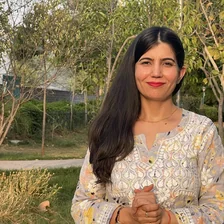
Taught by
Praveen
Founder of Trayam and a lifelong student of the Vedic sciences, teaching palmistry as a discipline to be understood rather than a fortune to be told.
More about PraveenHear it from our students
Tannu Grewal Payal Kumari
Enroll
₹11,000
10 days · 2 hrs/day · Zoom live · Beginner → Intermediate
10 days, two hours a day. Seats are kept few on purpose, so every session stays personal and interactive. Praveen confirms your batch dates with you on WhatsApp.
Before you enroll
- Do I need any prior knowledge?
- None at all. The course starts from the shape of the hand itself and builds up feature by feature, so a complete beginner can follow every lesson.
- What if I miss a live class?
- Every live class is recorded and stays yours to rewatch, so you can catch up in your own time and go back over a lesson whenever you need it.
- When does the next batch start?
- A new batch is forming now. Praveen confirms the exact dates with you on WhatsApp before it begins, so you always know what you are booking.
- How are the classes held?
- Live on Zoom with Praveen, 10 days at two hours a day. You get the full curriculum PDF on enrollment and a certificate of completion at the end.
Still unsure? Ask Praveen on WhatsApp there is no obligation to book.
Your Palmistry Reading
A careful, one-to-one reading of both hands. We look at the shape of your palm, the set of your fingers, and the major and minor lines, drawing out the strengths, tendencies, and turning points written there. Offered in the spirit of self-reflection, never fixed prophecy.
from ₹2,000 · 30 min
Those Who Have Sat with Trayam
“I highly recommend Praveen. She is truly excellent at what she does. During one of the most challenging phases of my life, when I was struggling both personally and professionally, I reached out to her for guidance. She carefully studied my kundli and suggested a few simple astrological remedies. To be honest, I initially ignored her advice. Like many of us, I only took it seriously when things became really difficult. She simply said, "Start doing these remedies. If they don't work, you can always stop." The moment I started following her guidance, I genuinely noticed a complete turnaround in my life. She studies your kundli thoroughly and recommends practical remedies that are easy to follow. Thank you, Praveen, for your guidance and support. I'm grateful to have you not only as a wonderful astrologer but also a great Mentor, and my personal astrologer.”
Ritika SainiRJ and Voice Over Artist “She is a very good, highly experienced and knowledgeable astrologer. I've been consulting her for almost 3 years now for guidance on different things in my life. What I like most is that whenever she sees a possible problem coming up, she doesn't just tell you about it, she also gives practical remedies that can help reduce its impact. Last year, I was very worried about a project because I was scared that it might slip out of my hands. I consulted her, and she suggested 2-3 remedies. Thankfully, I didn't lose the project, and I'm still working on it today. What I really appreciate about her is that she doesn't scare you when she sees a difficult phase coming. She listens patiently, understands your concerns, and gives you solutions instead of making you more worried. Her predictions have been around 99% accurate in my experience, which is why I've continued consulting her for the last three years.”
PriyankaGraphics Designer
Your Path into Palmistry
Sit for a private reading, or study palmistry properly from the ground up. Both begin with a single step.
Palmistry Course
₹11,000 · New batch forming